

EcoPorcNicus Operational Group 2026


Using satellite data to monitor emissions from slurry management. Application in the operating environment of a slurry management centre.
GO ECOPORCNICUS project
The project seeks to protect the environment by developing a demonstrator that uses satellite measurements to assess how NH₃ emissions can be attributed to their sources. It will also assess the development of new emissions monitoring services.
Why EcoPorcNicus?
An Operational Group focused on monitoring emissions from slurry management.

NH₃ emissions compared with other pollutants
The data show that ammonia emissions fell by a smaller percentage between 2005 and 2022 than emissions of other pollutants1.
One of the sector’s priorities is to help reduce ammonia emissions over the coming years.
1 Source: European Environment Agency

Sources of NH₃ emissions
Ammonia emissions projections for the EU-15 countries in 2020 showed wide differences in ammonia emissions across sectors1.
Developing strategies to mitigate nitrogen compounds such as ammonia requires assessing where they come from, including different livestock species as well as agricultural, human and industrial activity.
1 Source: European Environment Agency

Geographical distribution of NH₃ emissions
To complete the emissions profile and identify priority areas, the project also draws on an overview of ammonia emissions in Europe.
Maps of estimated emissions by NUTS 3 region in 2019, based on the INRAE dataset (2010), show higher ammonia (NH₃) emissions in areas including north-eastern Spain, western France and northern Italy1.
1 Source: ETC HE Report 2022/21, European Environment Agency

Distribution and environmental impacts of NH₃
The diagram shows the main processes in the nitrogen cycle1 and the environmental impacts of emissions of ammonia and other nitrogen compounds. It highlights the importance of emissions control strategies such as the one proposed by the EcoPorcNicus Operational Group.
1 Source: Current Biology


Uses of NH₃
Spain is estimated to use 2.5 million tonnes of NH₃ per year and emit 0.5 million tonnes into the atmosphere1.
1 Source: ETC HE Report 2022/21, European Environment Agency
2 Source: U.S. Energy Information Administration
Collaboration with the livestock sector
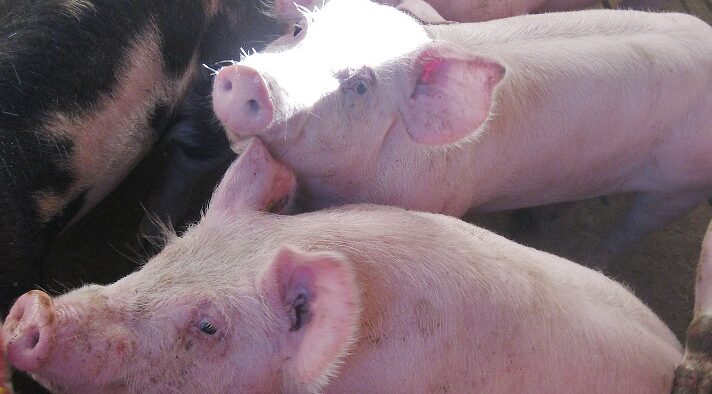
Beyond its technical results, one of EcoPorcNicus’s main strengths is the collaboration between the livestock sector, research centres and technical organisations. The project is exploring how different sources of environmental data can improve understanding of how ammonia behaves in the atmosphere and what current technologies can and cannot do.
How does EcoPorcNicus tackle emissions control?

The challenge: quantifying emissions to the atmosphere
- Build on existing solutions
- Combine information from livestock farmers with satellite data
- Propose methods that public authorities can apply
- Evaluate the methods at regional scale

Consortium
The consortium brings together the Spanish Pig Producers Cluster, the Regional Pig Health Defence Association No. 2, and two technology centres: the University of Zaragoza and the Agrifood Research and Technology Centre of Aragón.


Demonstrator
The demonstrator covers the area served by the Regional Pig Health Defence Association No. 2, which comprises two veterinary districts: Ejea de los Caballeros and Sos del Rey Católico.


Existing solution I:
ECOGAN emissions inventory

Existing solution II:
EDGAR emissions inventory
Source: ETC HE Report 2022/21, European Environment Agency

Copernicus data:
satellite data + modelling
About EcoPorcNicus
Results to date
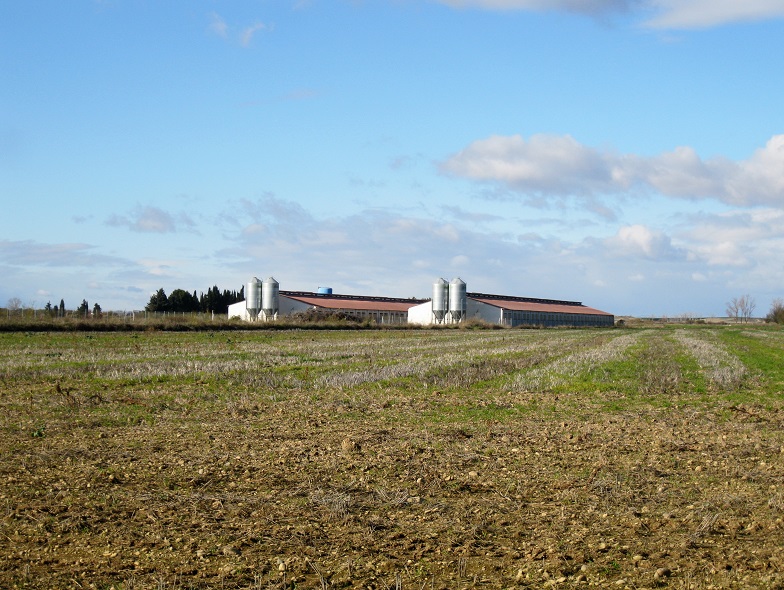
Over the past year, EcoPorcNicus has been analysing atmospheric and environmental data from European Earth observation services. The project used these data in exploratory analyses to identify relationships between NH₃ concentrations and weather variables, including temperature, wind, precipitation and atmospheric boundary layer height.
Another strand of the project is to develop and assess experimental models with higher spatial resolution. The aim is to see whether certain environmental variables can help produce more detailed spatial representations.
The project is still in development and validation. The models assessed so far are exploratory and have yet to be validated as monitoring tools for practical use. In the coming months, EcoPorcNicus will continue to develop and assess higher-resolution models and compare sources of atmospheric and environmental data. The aim is to build technical knowledge that can inform future sustainability and environmental management strategies for the pig sector.
Events and workshops
Members of the EcoPorcNicus Operational Group have presented the project’s objectives and results to date at a range of events and workshops.
-

i+Porc and CAMPAG hold joint workshop on sustainability and cybersecurity
On Thursday 18 June, the Spanish Pig Producers’ Cluster (i+Porc) and the Aragon Agricultural and Livestock Production Equipment…
-

Farming sector comes together to tackle the environmental challenge of ammonia
On Thursday 11 June, i+Porc took part in ‘The challenge of ammonia emissions: monitoring, control and recovery in…
Publications

Sólo Cerdo Ibérico

Revista Ganadería

Tierras Porcino

Heraldo del campo
Operational Group
The EcoPorcNicus Operational Group (EPN) is coordinated by i+Porc, the Spanish Pig Producers Cluster, which has extensive experience leading research, development and innovation projects for the pig sector. The group also includes the Regional Pig Health Defence Association No. 2 of Ejea de los Caballeros, which represents numerous farms and has expertise in ECOGAN, the platform for reporting and recording best available techniques (BAT). Two technology centres complete the group: the University of Zaragoza, with expertise in modelling ventilation systems, emissions and weather, and the Agrifood Research and Technology Centre of Aragón (CITA), which has conducted numerous studies on slurry and emissions in the pig sector.


2023–2027 CAP National Strategic Plan
The ECOPORCNICUS Operational Group received funding under Aragón’s 2024 call for cooperation grants for European Innovation Partnership (EIP) operational groups, as part of Spain’s 2023–2027 CAP National Strategic Plan (Order AGA/299/2024).
The European Union co-funded 80% of the project and the Ministry of Agriculture, Fisheries and Food funded the remaining 20%. GOP2024003500.


