
• The event brings together integrated livestock companies, training centres and students to discuss generational renewal and recruitment in a key sector for the regional economy.
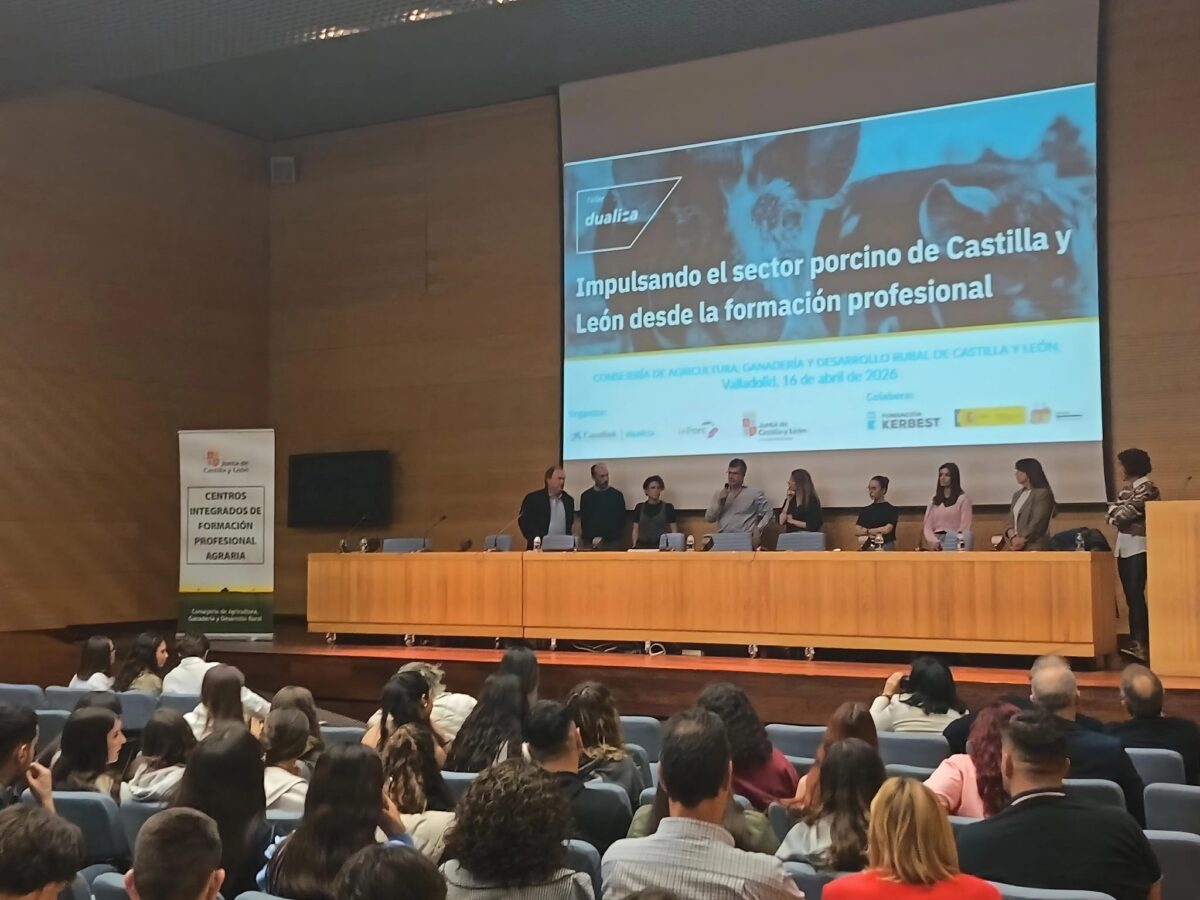
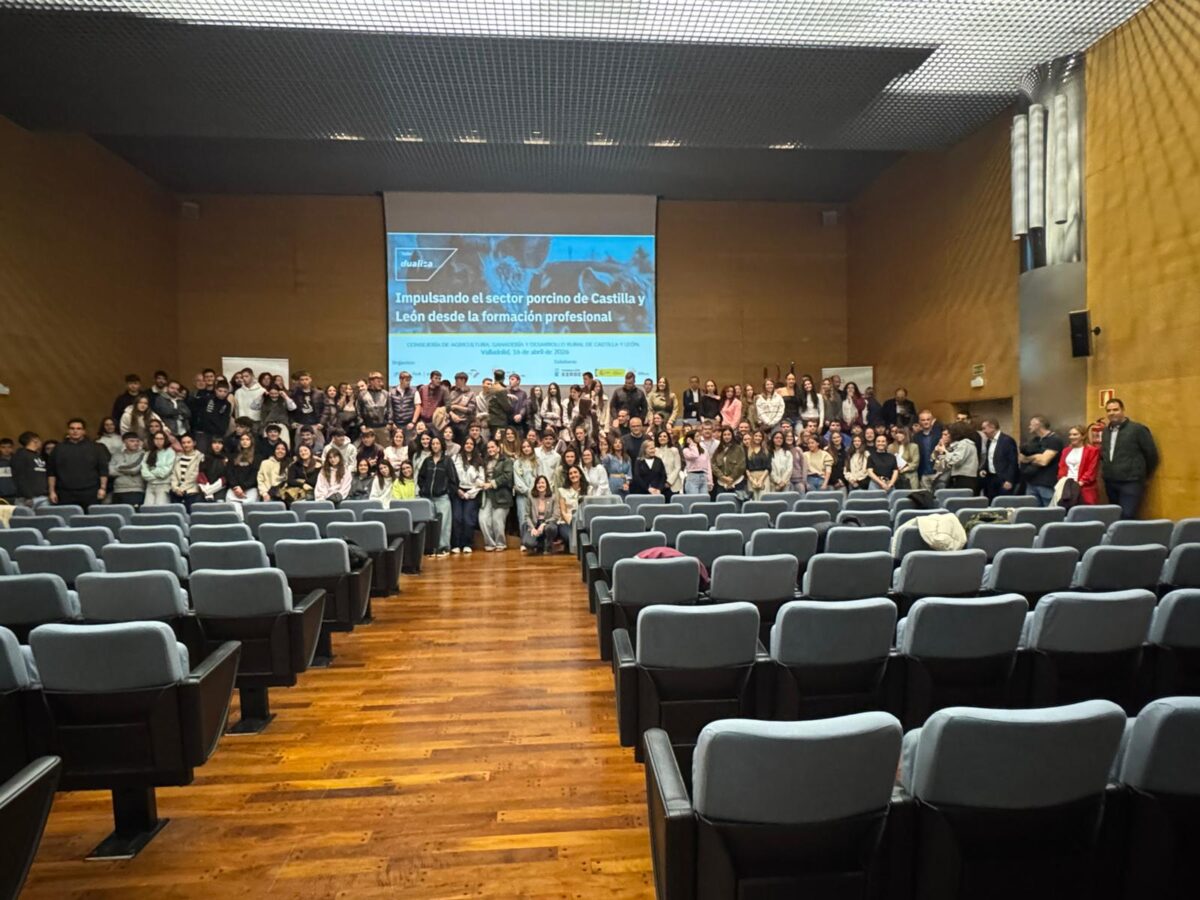
On Thursday in Valladolid, Castilla y León’s Department of Agriculture, Livestock and Rural Development, CaixaBank Dualiza and the Spanish Pig Producers’ Cluster (i+Porc), in partnership with Kerbest, brought pig producers together with vocational education teachers and students. They discussed how the new dual vocational training system can help attract and train the people the sector will need in the years ahead.
Leading regional livestock integrators took part, including Copiso, Uvesa, SAT Hermanos Chico, Progatecsa, Proinserga, Integraciones Biológicas Porcino SL, Agrocesa–Vall Companys and Innoporc. Together they represent most of the region’s pig sector. They discussed how working with training centres can help prepare for generational renewal.
Pig production is a major source of income and employment in Castilla y León. It provides around 15,000 direct jobs, mostly in rural areas, and generates nearly €2 billion annually, approximately 23% of the value of the region’s agricultural output. Including the wider agri-food chain and related industries, its impact can reach 6% of regional GDP.
The workshop examined the impact of new vocational training rules promoting dual training across all programmes. By combining classroom learning with practical training in the workplace, the model allows employers to play an active role in preparing future professionals.
The initiative also addresses recruitment needs in agriculture and livestock farming. According to the Vocational Training Observatory, the sector was expected to generate more than 8,000 job opportunities in Castilla y León by 2025, around a quarter for vocational graduates. Most would replace retiring workers, highlighting the need to train skilled recruits.
The Department of Agriculture, Livestock and Rural Development manages the regional government’s eight agricultural vocational training centres. They offer 22 programmes, with 761 students enrolled this academic year, 28% more than five years ago.
The programme included a panel where businesses, training centres and students shared their experiences, as well as networking sessions. At a student-employer meeting entitled ‘From classroom to farm: your future in the pig sector’, young people learned first-hand about jobs, working conditions and the technology used in the industry.
The organisers stressed that, despite recent challenges, international demand, innovation and sustainability support prospects for moderate, sustained growth. Dual vocational training is central to the sector’s competitiveness and its continuing presence in rural communities.
Commitment to quality education
At i+Porc we thank our producer members who took an active part: Agrocesa–Vall Companys, Copiso, Innoporc, Integraciones Biológicas Porcino SL, SAT Hermanos Chico, Proinserga, Progatecsa and Uvesa. We also recognise the agricultural vocational training centres and their teachers, whose commitment to quality and adaptation to the new training model is essential to preparing skilled, motivated professionals.
Events like this show what educators, public authorities and businesses can achieve for local communities and the future of pig farming when they work together.

