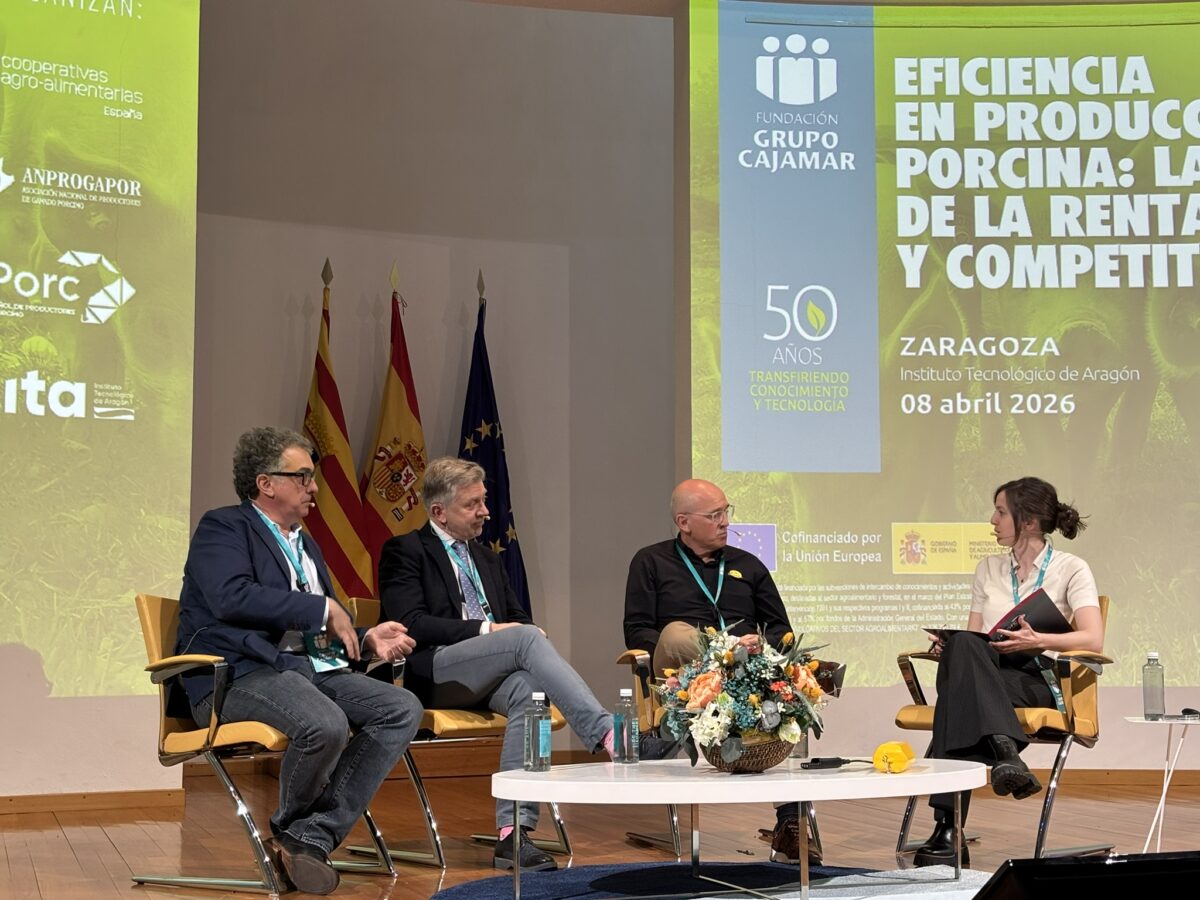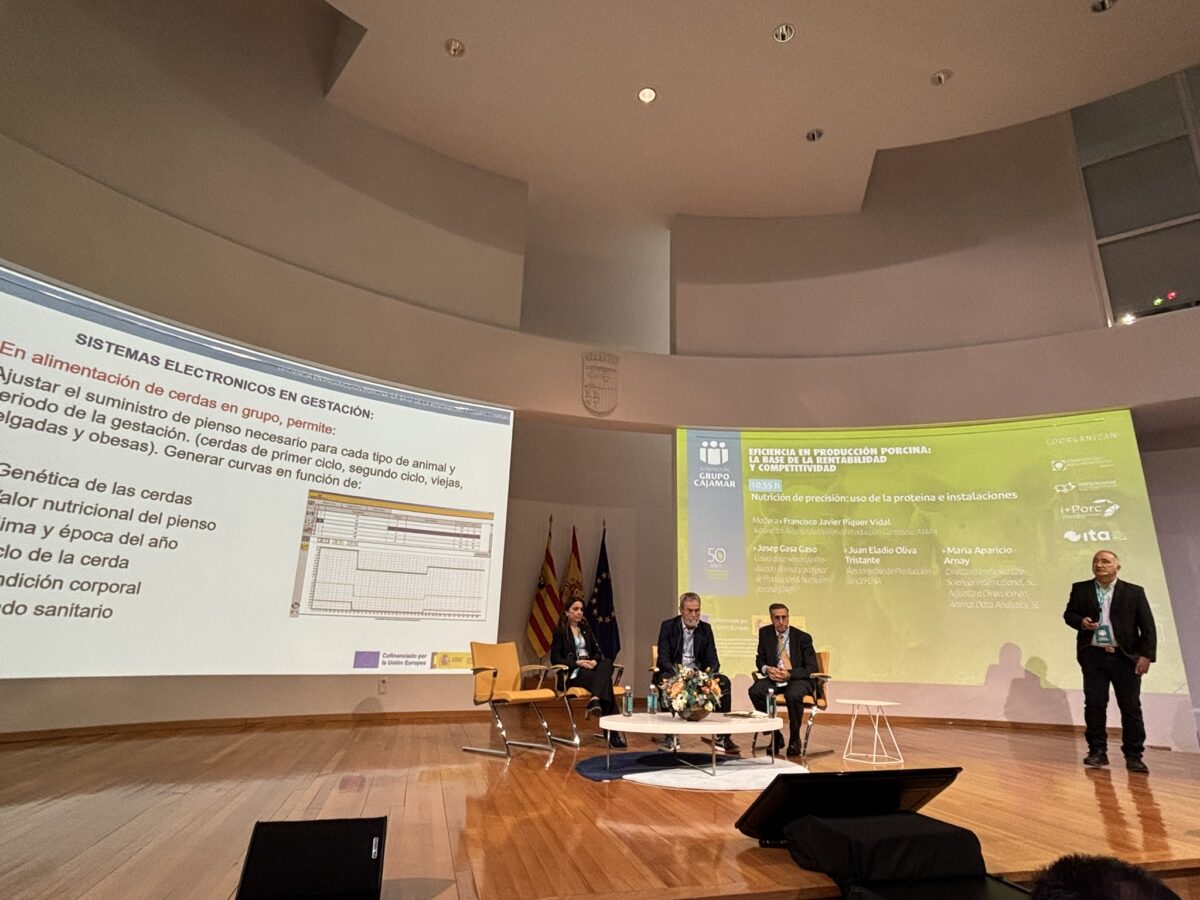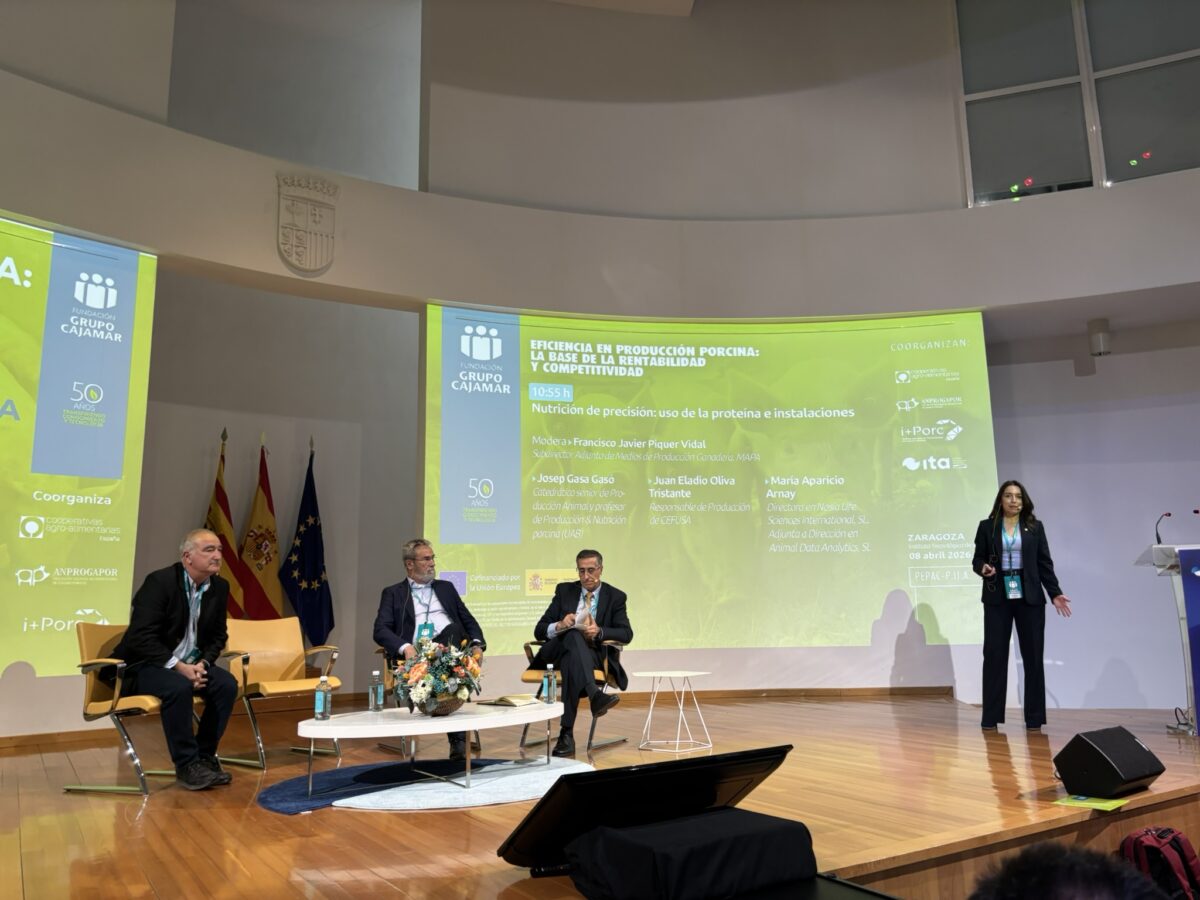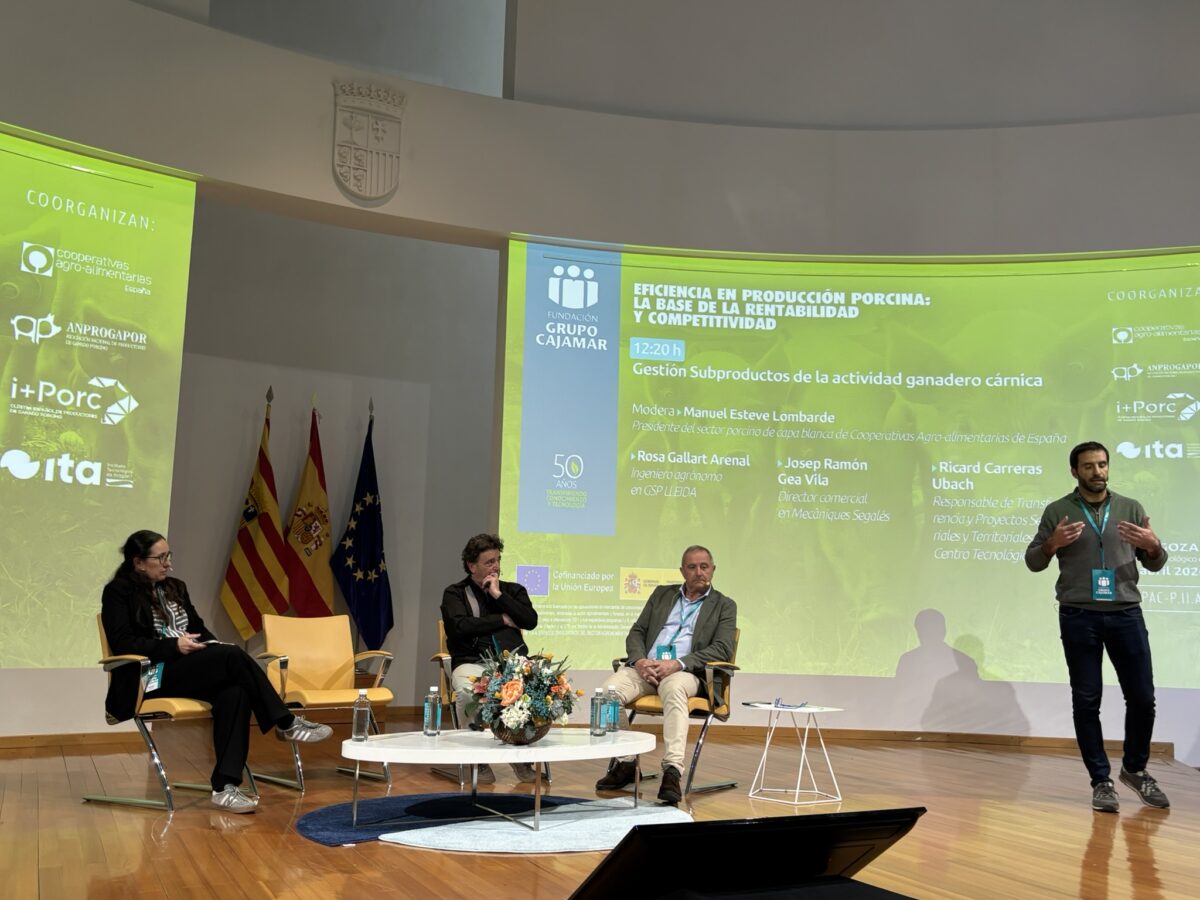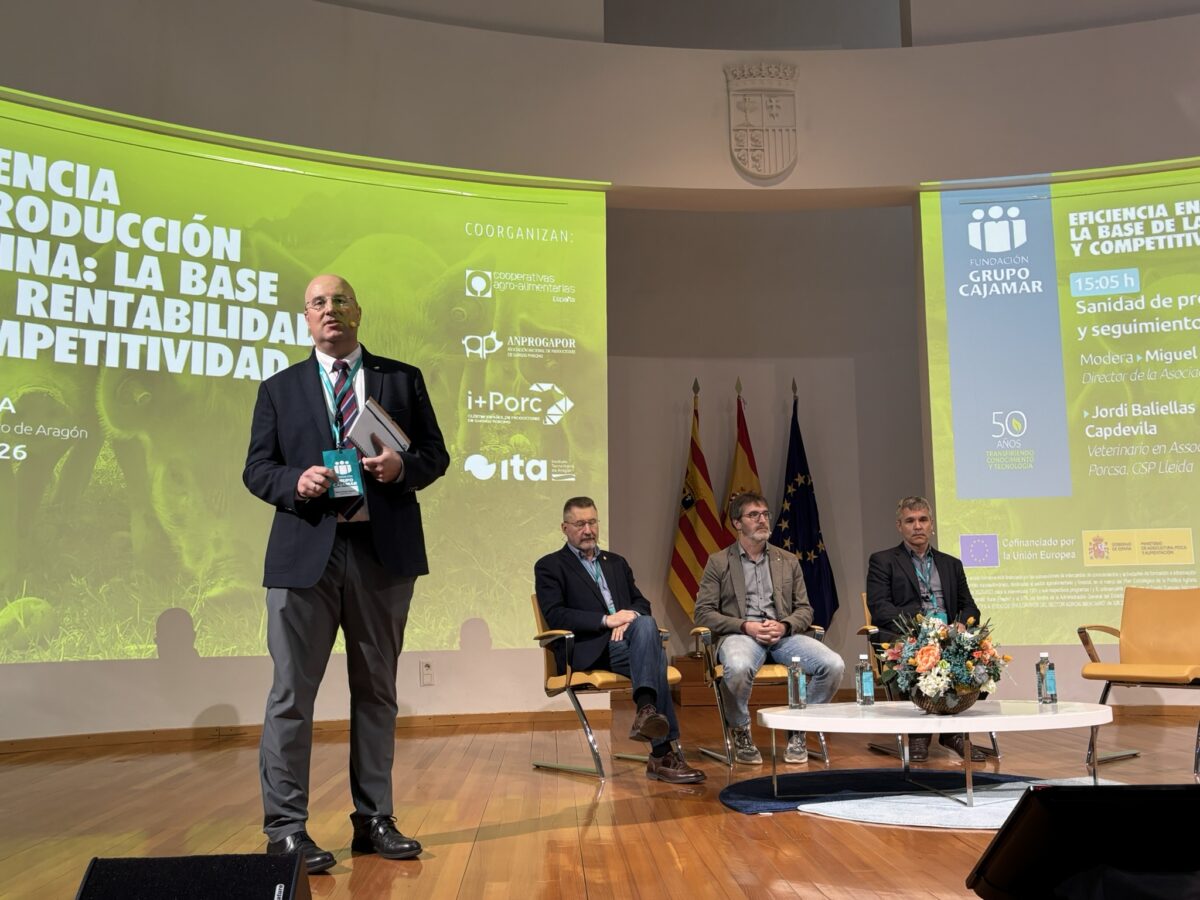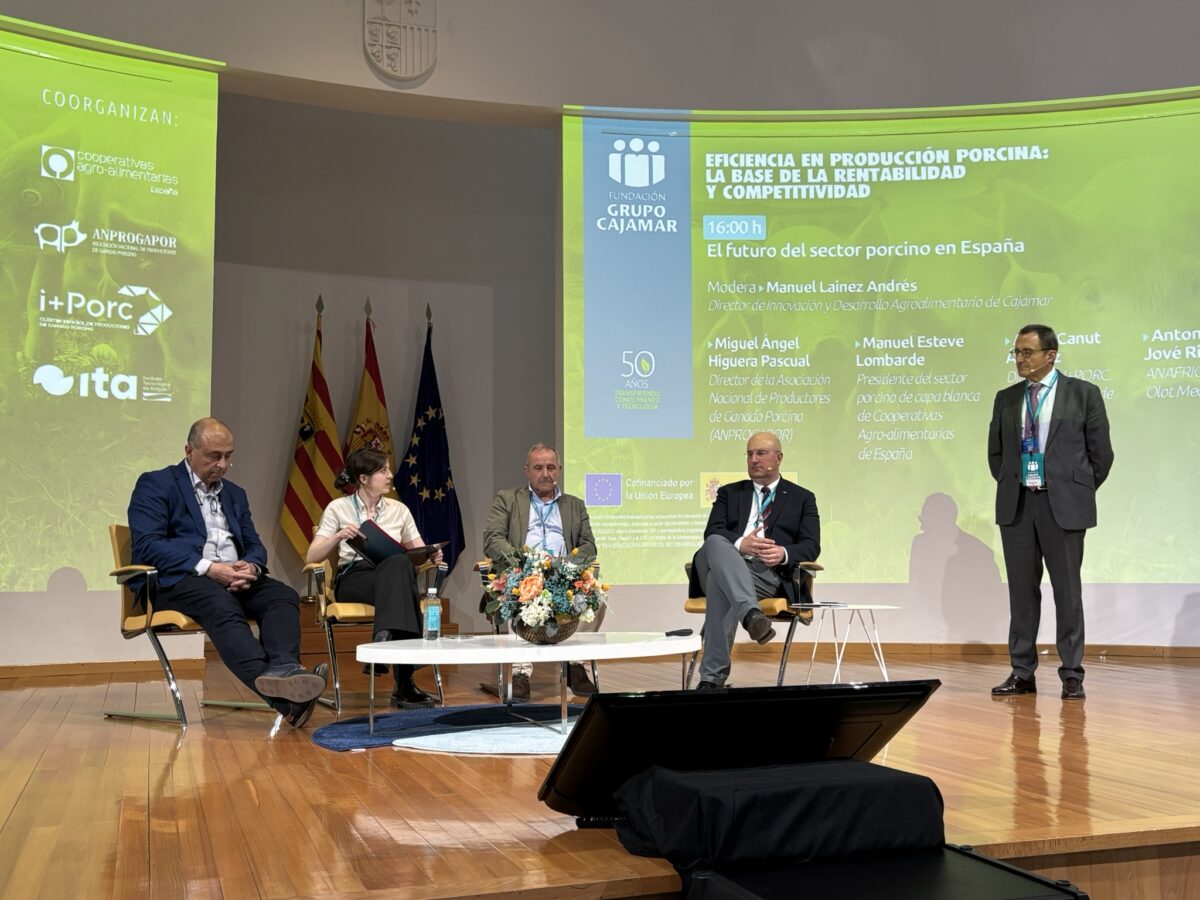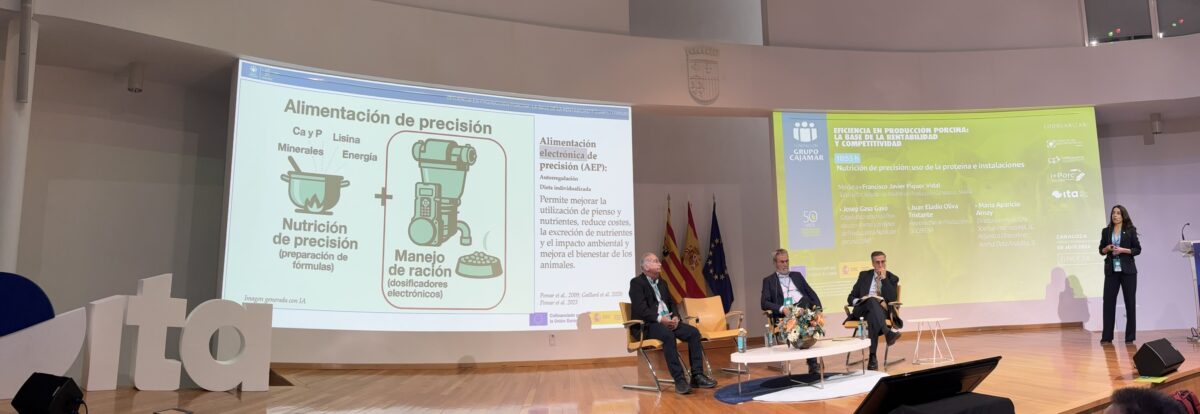
Yesterday we attended Efficiency in pig production: the basis for profitability and competitiveness, an event promoted by Fundación Grupo Cajamar and co-organised by the Spanish Pig Producers’ Cluster, ANPROGAPOR and Cooperativas Agro-alimentarias de España, with the support of the Aragon Institute of Technology, which hosted the event.
i+Porc also took an active part in the programme. Cluster director Alicia Canut chaired the first roundtable, ‘The pig sector workforce: automation and robotics’, and joined the closing panel, ‘The future of the pig sector in Spain’. The final discussion considered major challenges facing the sector in the current production, economic and regulatory environment.
Efficiency and innovation to improve competitiveness
The workshop focused on efficiency as a foundation for farm profitability and competitiveness. Topics included process optimisation, data-informed decisions, animal health and sustainable production systems. Innovation emerged as a common thread in addressing both present and future challenges.
Every panel discussed the need to bring a new generation into farming, a prerequisite for many proposed solutions. Speakers repeatedly stressed the need to raise the profession’s standing and attract people with the skills to run modern, sustainable farms that can compete in the market.
Recognition for the pig sector in domestic and international markets
The closing discussion called on pig producers to play a more active role in national and international affairs, reflecting their importance to Spain’s economy, and to represent their interests as markets reassess the dietary value of animal protein. Speakers also considered growing markets, highlighting Africa’s medium-term potential. Europe, and Spain in particular, would have a geographical advantage if production costs could be aligned with the region’s growing purchasing power.
Representatives of the Ministry of Agriculture, Fisheries and Food (MAPA), cluster members and partners also discussed the current state of pig farming from a range of perspectives. Participants included Óscar Toledano (Rotecna), Antonio González de Bulnes (Mensoft), Fernando Fonseca (OPP Group), Juan Eladio Oliva (Cefusa), María Aparicio (Animal Data Analytics), Rosa Gallart (GSP Lleida), Ramón Ejea (Mecàniques Segalés), Ricard Carreras (BETA Technology Centre), Lluís Miquel Plà Aragonés (University of Lleida), Eduardo Alegre (Nealia), Joan Rocadembosch (SIP Consultors) and Miguel Ángel Higuera (ANPROGAPOR).
The panels highlighted the need for more efficient farm models suited to current conditions and for action on structural challenges, including recruiting skilled staff and integrating new technologies into day-to-day farm operations.
We thank all the organisers, partners and speakers for their contributions. We continue to work with our members on initiatives that improve efficiency, sustainability and competitiveness in pig production.